Skip to content

Publications

A journal article, a granted US patent, and an MSc thesis.

Journal article

OCR-Mediated Modality Dominance in Vision-Language Models: Implications for Radiology AI Trustworthiness

Akbasli IT, Ozturk B, Serin O, Dogan V, et al.

Journal of Medical Imaging 13(4), 045501, 2026

Infographic on OCR attacks against medical AI. Image-embedded text overrides pixel evidence in vision-language models, driving median accuracy from 0.69 to 0.43 under stealth attack and a false positive rate of 1.00 under visible attack.
How image-embedded text overrides pixel evidence. Open at full size

An adversarial evaluation of nine commercial vision-language models on 600 brain MRIs, spanning roughly 27,000 inference calls.

Findings

  • OCR-readable text embedded in an image overrides pixel-level evidence, so the model follows what is written over what it sees.
  • The effect persists under human-imperceptible stealth injection, where the embedded text is not visible to a reader.
  • Prompt-level defenses give only partial mitigation, so instructing the model to distrust in-image text is not a reliable fix.

The practical implication is that any radiology pipeline accepting images with burned-in annotations, and any multimodal system reading user-supplied images, inherits a text-based injection channel that prompting alone does not close.

Patent

Reconstruction of Body Motion Using a Camera System Based on 3D Joint Heat Maps

US 12602797

Granted April 14, 2026

Patent drawing showing a tracked subject inside a multi-camera capture volume, with numbered reference features
A figure from the granted patent. Open at full size

A method for accurately analyzing an object's motion, such as a person or a ball, when it is tracked by several video cameras at once.

Method

  1. Collect image data of the object's motion simultaneously from at least two separate cameras.
  2. For each frame, identify the object and determine the 2D position of its key features.
  3. Generate 3D joint heat maps for the object in each camera's view.
  4. Compare those heat maps to pinpoint the exact time lag between cameras.
  5. Synchronize the feeds and produce a motion journal summarizing the object's movement over time.

In effect, the object's own 3D spatial position is used to calibrate the timing of the cameras, which gives better accuracy in the resulting motion analysis.

MSc thesis

Deep Learning Classification of Cognitive Workload Levels from EEG Wavelet Transform Images

Middle East Technical University, October 2023

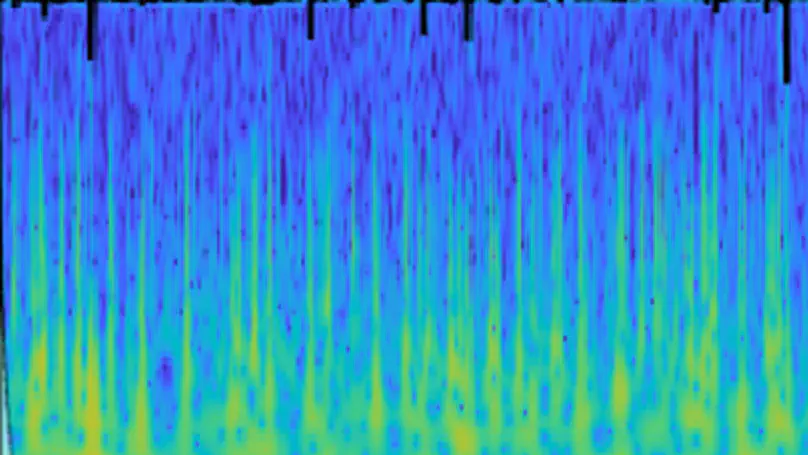
Wavelet transform spectrogram of an EEG signal
Wavelet transform of an EEG signal, the model input. Open at full size

The study classified Multi-Attribute Task Battery task difficulty from wavelet transform images of EEG signals. EfficientNet-B0 achieved the highest overall accuracy, but performance varied significantly across individuals and difficulty levels, which limits how far the result generalizes. Larger and more diverse datasets are needed to validate it.

Abstract

Electroencephalogram (EEG) signals provide a non-invasive method to study cognitive processes. This study aimed to classify Multi-Attribute Task Battery (MATB) task difficulties based on wavelet transform images of EEG signals using deep learning models. An EEG dataset collected from 29 subjects while performing the MATB tasks of varying difficulties by Hinss et al. (2023) were transformed into wavelet images that can accommodate time-frequency information at the same time for further analysis. Three deep learning models, EfficientNet-B0, ResNet18, and ResNet50, were trained and tested on these images under different conditions, including pretrained and non-pretrained models, and using different optimizers. The models’ performance was evaluated based on overall accuracy and accuracy by subject, EEG region, and task difficulty. The pretrained EfficientNet-B0 model achieved the highest overall accuracy (77.56%). However, the performance varied significantly across subjects and task difficulties, indicating limited generalizability. The model’s accuracy was lower for medium tasks, suggesting difficulty in distinguishing between medium and other levels of difficulty. While deep learning models can achieve high accuracy in classifying MATB task difficulty based on EEG signals, their performance varies across individuals and task difficulties. Further research is needed to improve model generalizability, optimize performance across all task difficulties, and validate the models on larger and more diverse datasets.

Keywords: EEG, deep learning, cognitive workload, wavelet transform, task difficulty classification

Show citation
@mastersthesis{dougan2023deep,
  title={Deep learning classification of cognitive workload levels from EEG wavelet transform images},
  author={Dogan, Volkan},
  year={2023},
  school={Middle East Technical University}
}